Every face said yes.
The person owns the record of their likeness, and shares in every licence sold.
Any face can be generated now. Consentique is where brands and agencies hire real, named people who agreed to it, and where the value flows back to the face in the frame. Likeness, licensed at the source.
 I SAID YES
The face is generated. The person is real.
For a century, putting a face in your content meant booking a person for a shoot. AI changed the method, not the fact that a real person sits behind the face. The image can be made in minutes now, in any pose, any market, any format. The open question is no longer whether you can make it, it is whether the person in it agreed.






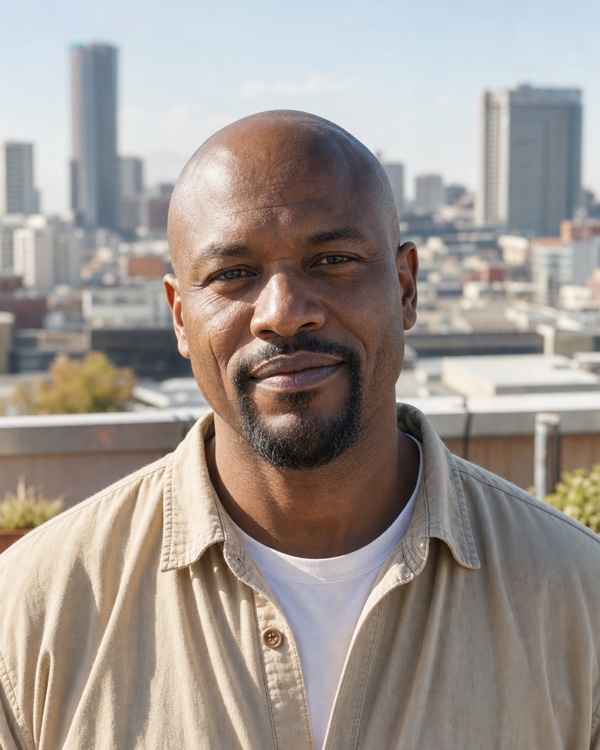
The law is settling on one answer: a yes on the record.
The rules are catching up, and they point the same way. New York's Fashion Workers Act, in force since 19 June 2025, now requires clear written consent naming scope, purpose, duration and pay, and puts the duty on the advertiser, not only the agency. The NO FAKES Act, with statutory damages up to $750,000 a violation, cleared the Senate Judiciary Committee on a unanimous vote in June 2026. Acting early is the advantage, because the standard is already visible.
A standard release was written for retouching, not for generating.
Where consent is thin, the fight is a contract fight. In Pujols v Rainbow Shops, a model found AI generated images of herself in poses she never shot, and the retailer is defending on the scope of an old release; the court denied her injunction on 16 July 2026. The safe path is a clear yes, on the record, before the work is made.
This is the market, and it wants a version it can trust.
The appetite is here on both sides, for content and for consent. Brands are already making AI content at scale, and the people whose faces carry it want a say in how it is used and a share in what it earns.
The numbers behind that appetite, the market size, the adoption and the public support for consent, the headlines can be found in every claim carries a source below.
Built on permission. Powered by ownership.
 I SAID YES
Plenty of tools can gather a yes, so a yes on its own is only the starting point. On Consentique the yes belongs to the person and keeps paying them. Each contributor keeps the record of their own likeness, sets the terms, and shares in every licence sold.
Picture a teacher who recorded one lesson, gave her yes on the record, and set the terms herself. Her licensed avatar now teaches that lesson in classrooms far from her own, and each time a brand licenses it she shares in it again. She can see every use, and she can switch off. That is what a brand's legal team signs off, what a producer delivers with confidence, and what a person can say yes to knowing they own it.
Every claim carries a source.
| 84% agree they should be protected from unauthorised AI use of their voice and likeness | Boston University and Ipsos, Sep 2025 |
| 75% support a right to license their likeness for AI | Boston University and Ipsos, Sep 2025 |
| 60+ of the Fortune 100 already use one AI avatar company to make content | Synthesia, 2025 |
| $5-21bn the synthetic media market, 2024 to a 2033 forecast | Grand View Research |
| $750,000 statutory damages a violation in the NO FAKES Act, through committee on a unanimous vote, 18 Jun 2026 | Congress.gov S.4591 |
| 2 Aug 2026 the EU AI Act adds a duty to disclose AI generated people | EU AI Act, Article 50 |
| Pujols v Rainbow Shops injunction denied 16 Jul 2026, the defence resting on the scope of an old release | NY Supreme Court, 157543-2026 |
The law is moving. Here is where.
Every act, case and ruling shaping licensed likeness, with a plain read of what each one means for you. Updated as the news lands.
YouTube names explicit consent as a formal answer to an AI likeness claim
EU AI Act transparency rules require labelling AI generated people from 2 August 2026
AI actor Tilly Norwood draws a backlash from performers over consent and training
New York Fashion Workers Act sets consent rules for AI digital replicas of models
Built for the reason you are here.
Hire a cast, cleared at the source.
Get paid for your face.
Deliver work that clears.
Every face said yes.
The way a face is used has changed, and the version that clears is the one that agreed. Get ahead of it now, on a platform built around the yes.